 easywall
GitHub ↗
easywall
GitHub ↗
Blocklist
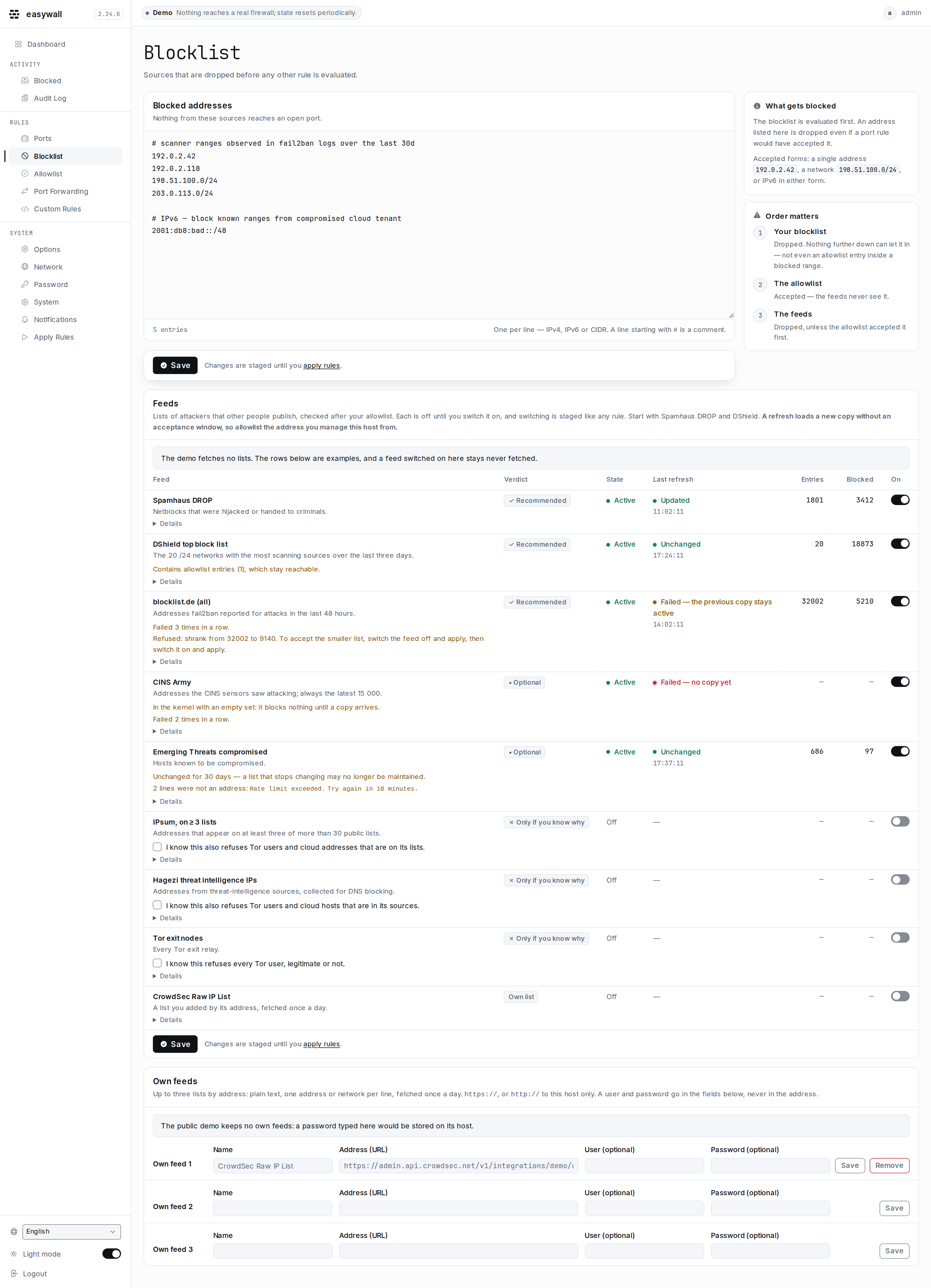
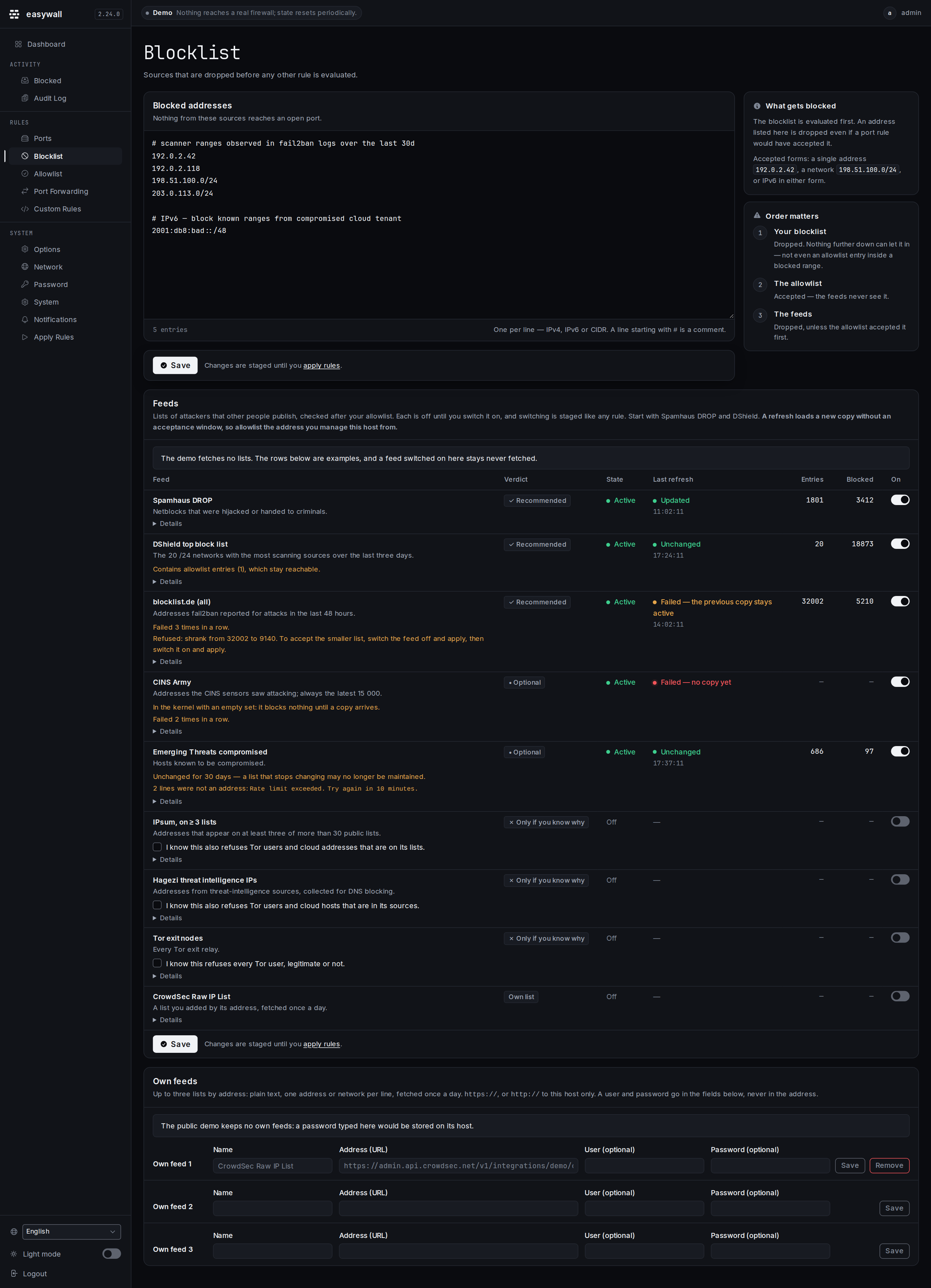
A list of addresses that are dropped. It is consulted before every other rule that can accept a packet, which is the only thing about it you really need to remember.
The order
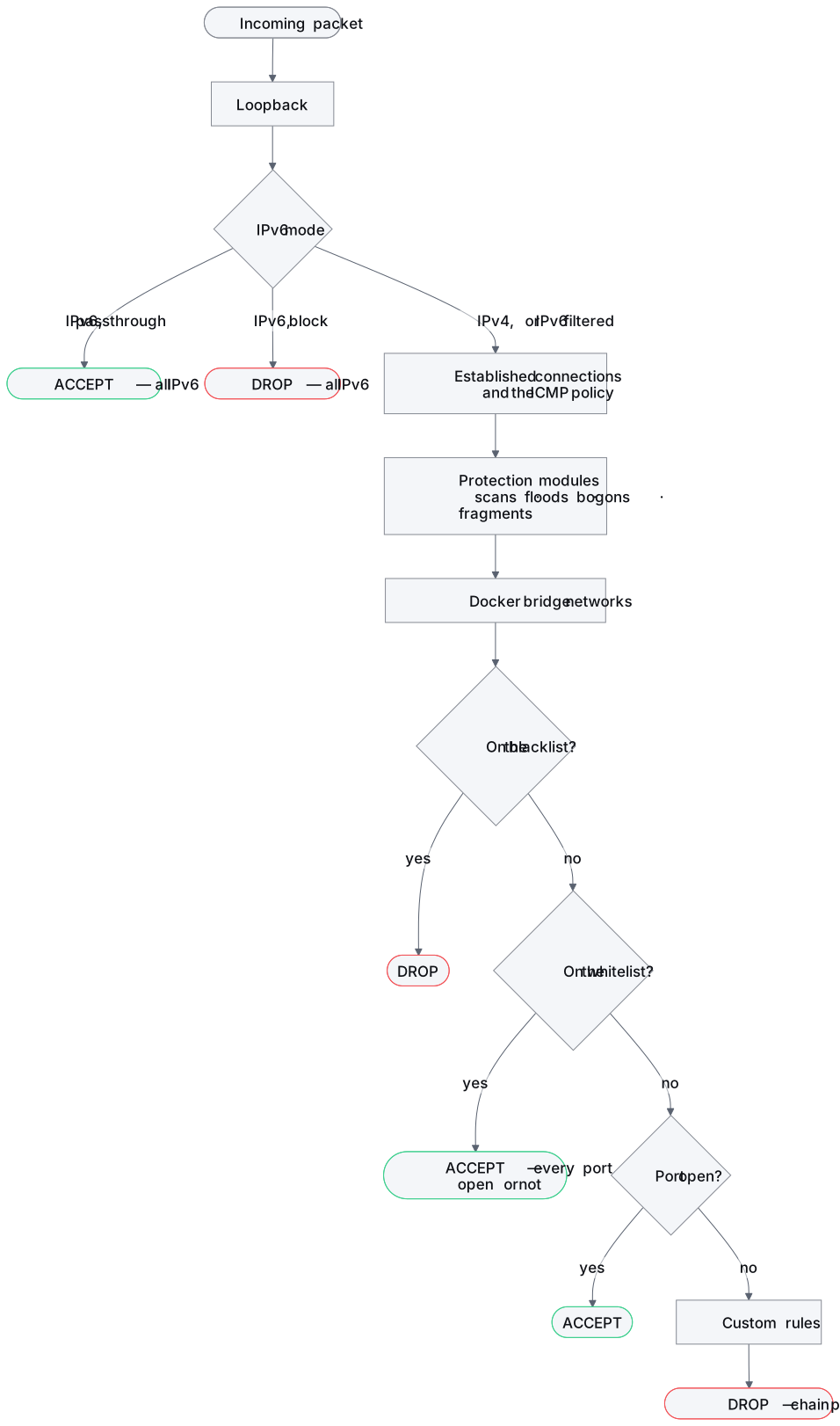
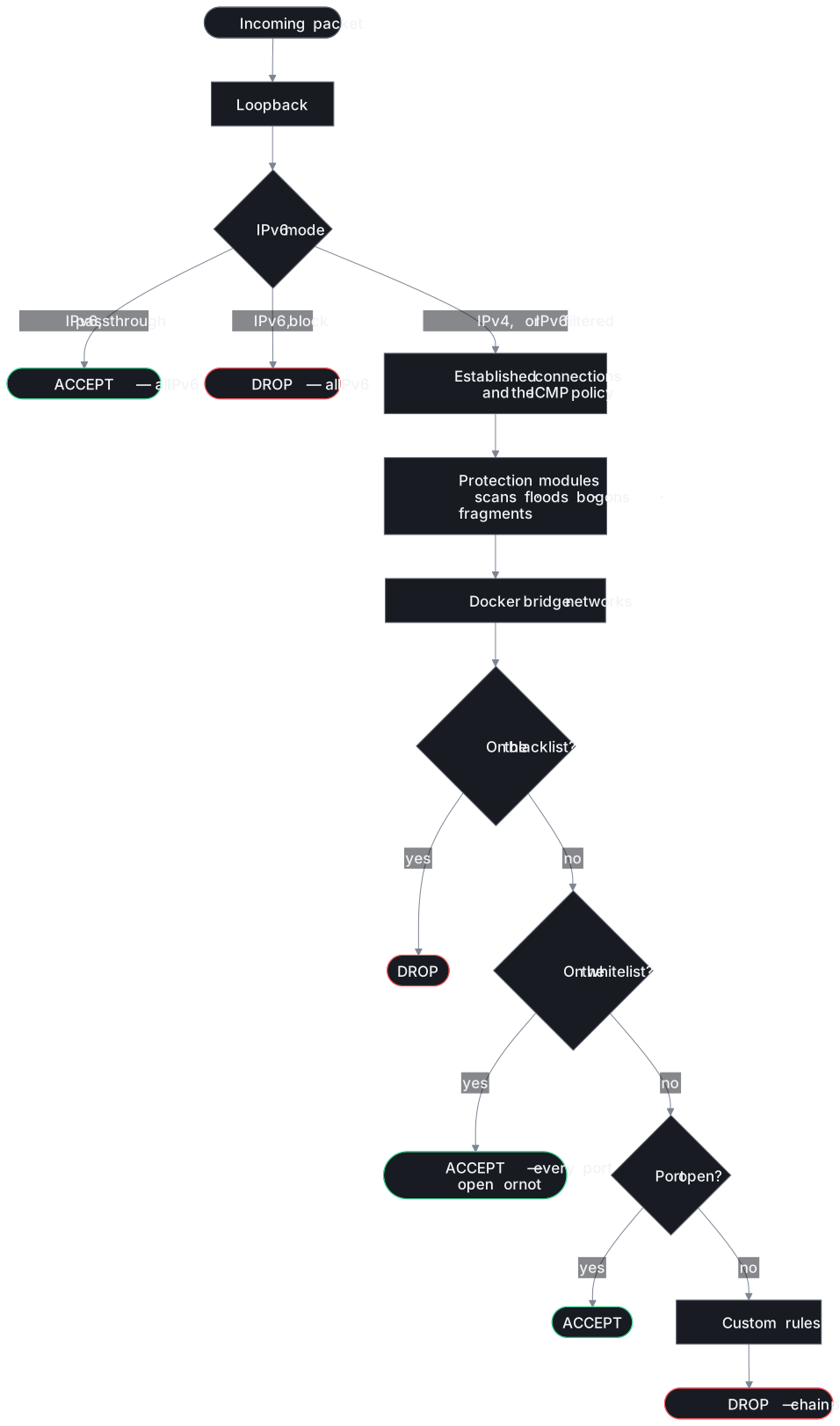
The blocklist wins. An address on both lists is dropped, because the blocklist is evaluated first. A narrow allow inside a wide block does not work — take the entry off the blocklist instead.
Fixed in 2.11. The SSH brute-force chain is consulted before the blocklist and used to accept, so a blocklisted address could still open an SSH connection while it stayed under the rate limit. It now returns, and the blocklist decides.
The list consulted immediately after this one is the allowlist, which accepts. Lists other people publish come after both: feeds.
What it does
| Effect | DROP |
| Evaluated | before the allowlist, and before the port rules |
| Skips the protection modules | no — those run first |
| Use it for | a scanner, an abusive network |
Accepted input
One entry per line. Lines starting with # are comments; blank lines are ignored.
| Form | Example |
|---|---|
| IPv4 address | 192.0.2.42 |
| IPv4 network | 198.51.100.0/24 |
| IPv6 address | 2001:db8::1 |
| IPv6 network | 2001:db8::/32 |
The counter under the editor counts real entries — comments and blanks do not inflate it.
When it does not work
| Symptom | Cause |
|---|---|
| A blocklisted address still gets through | The connection was already established; the list only affects new ones |
| An address you also allowlisted is still blocked | The blocklist is checked first, and it wins. Take the entry off the blocklist |
| Nothing changed after saving | Saving stages. It goes live on Apply |
| The editor names a line number | That line is not a valid address or CIDR; the message says why |
Need the network a single address belongs to?
whois 198.51.100.42 | grep -i route
Logging blocklist hits is a switch on the options page;
they appear in the kernel log with an easywall blocklist: prefix.